
Why Age Restrictions Matter on Online Gaming Platforms
Picture this a parent in Pune checks their bank account one morning and finds Rs 2,500 missing. Their 15-year-old had used a parent’s phone number to sign up on a real-money gaming app, deposited money through UPI, and lost it all within a few hours. The platform asked for a date of birth during registration. That was the only check.
This kind of situation is no longer unusual. India’s online gaming market grew to roughly 488 million players in 2024, and the Economic Survey 2025-26 flagged digital addiction as a drag on both mental health and productivity. Age restrictions on online gaming platforms are one of the most direct answers to this problem, yet many Indian players and parents still don’t know why these checks exist or what Indian law requires.
What Exactly Is an Age Restriction on a Gaming Platform?
An age restriction is a rule that stops anyone below a certain age from registering, depositing money, or playing on a platform. For casual mobile games, the minimum age is typically 13 years. For real-money games where you put in actual money and play for prizes, the minimum under Indian rules is 18 years.
When this rule is enforced properly, the platform asks for a government-issued ID during signup, such as an Aadhaar number or PAN card, and verifies that the person is of legal age. This process is called KYC, which stands for Know Your Customer. A platform that only asks you to type in a birth date is not really enforcing any age limit at all.
Why Do Age Restrictions on Online Gaming Platforms Matter So Much?
They protect young people from serious financial harm
Real-money gaming involves actual deposits and actual losses. Teenagers and young adults are particularly at risk because the brain’s impulse-control systems are not fully developed until the mid-twenties. A 16-year-old who loses Rs 300 may try to recover it by putting in Rs 600 the next day. This chasing behaviour is exactly how addiction begins.
Government estimates presented in the Rajya Sabha put the number of people affected by online money games at nearly 45 crore, with losses exceeding Rs 20,000 crore. These are not abstract figures. They include students who spent money meant for school fees, and young adults who borrowed from family members to fund gaming sessions.
According to the Tamil Nadu Online Gaming Authority TNOGA, around 85% of students play online games, and nearly 20% show signs of addiction. Age restrictions, combined with spending limits, are the most direct way to reduce this exposure for minors.
They keep minors away from content they are not ready for

Not every online game is a harmless puzzle. Some games contain graphic violence, adult themes, or mechanics that closely resemble gambling, such as loot boxes where a player spends money for a random in-game reward. A 12-year-old accessing these platforms through a family phone should not be reaching content designed for adults. Age gates create a barrier that routes younger players to appropriate games.
They protect platforms from legal consequences
A platform that allows minors to play real-money games faces serious legal risk under Indian law. This is not just an ethical concern. Companies that fail to enforce age restrictions under Tamil Nadu’s regulations can be penalised, have their licences revoked, or face legal charges for non-compliance. Age verification is, in a very practical sense, how a platform protects its own ability to operate.
What Indian Rules Say About Age on Gaming Platforms
India’s national framework for online gaming was built through MeitY’s amendment to the Information Technology Intermediary Guidelines and Digital Media Ethics Code Rules, 2021, notified on April 6, 2023. These amendments introduced a co-regulatory approach to promote responsible gaming, defined permissible online real-money games, and guided the establishment of government-designated Self-Regulatory Bodies SRBs to certify games.
At the state level, Tamil Nadu moved ahead with specific enforceable rules. On February 7, 2025, Tamil Nadu introduced the Tamil Nadu Online Gaming Authority Real Money Games Regulations 2025, which bar all people under the age of 18 from playing online real-money games, and make KYC mandatory for all players before they can engage in such gaming.
The Promotion and Regulation of Online Gaming Rules, 2026, which came into effect on May 1, 2026, mark a shift to a structured framework built around user protection, age verification, time limits, parental controls, grievance redressal, and a new Online Gaming Authority of India.
Despite all this progress, India currently lacks a standardised age-rating framework for games, unlike other digital content sectors such as OTT platforms and frameworks in other countries. Enforcement is still catching up with the sheer pace of growth in the industry.
How Responsible Platforms Handle This in Practice
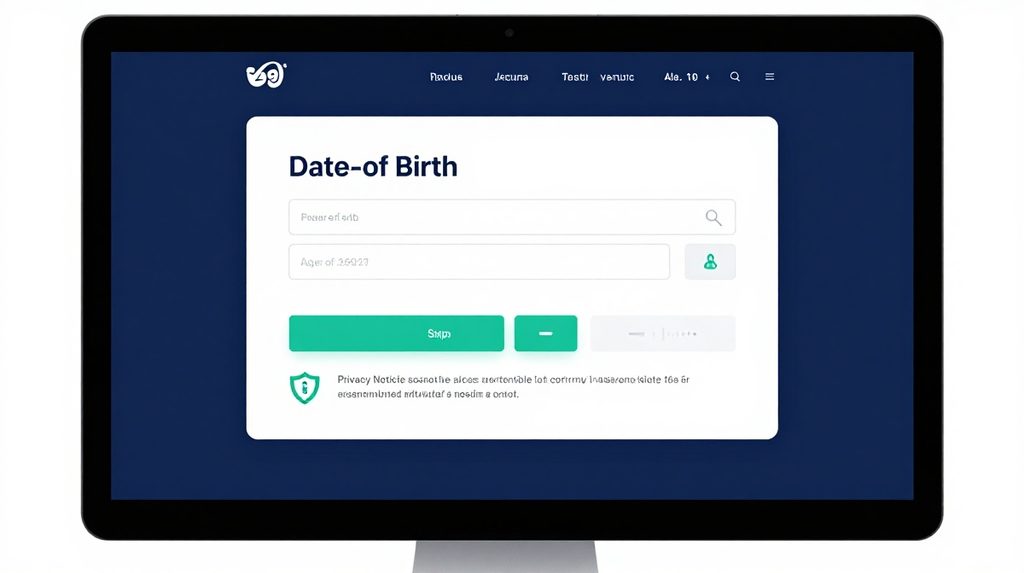
The gap between what the law requires and what platforms actually do varies considerably. Good platforms build identity verification into the signup process from the start. When you install an app such as lotus365 apk, the registration flow requires ID proof before any real-money features become accessible. This is not optional on compliant platforms. Skipping this step opens the platform to regulatory action.
Beyond age verification, responsible platforms offer players tools to manage their own behaviour. Spending caps, cool-off periods between sessions, and self-exclusion features let adults who want to limit their playing actually do so. Variants of popular apps like lotus365 blue display addiction warnings at the start of sessions, as Tamil Nadu’s rules require. A report by IndiaTech.org and the Digital India Foundation recommends a national framework emphasising age verification, spending controls, and self-exclusion tools, warning that blanket bans simply push users to unregulated platforms.
What You Should Do as a Parent or Player
If you are a parent, go through the apps on your child’s phone and check the age rating listed on the Play Store or App Store. Look for whether the platform asks for ID before allowing real-money deposits. If there is no ID check, that is a red flag. Most reputable platforms will have a clearly stated minimum age in their Terms of Service.
If you are an adult player, age restrictions on the platforms you use are actually a mark in their favour. A platform that takes ID verification seriously is also one that is more likely to follow responsible gaming rules around payouts, dispute resolution, and spending safeguards.
A note on risk: Real-money gaming carries financial risk at any age. If you or someone in your family is spending beyond what they can comfortably afford, please speak with a mental health professional. The iCall helpline 9152987821 provides free counselling support. Platforms registered under Indian rules are legally required to provide self-exclusion tools. Knowing that these exist and how to use them is part of playing responsibly.