Online Betting Games in India Rules, Risks and Legal Awareness
A young IT professional from Bengaluru starts with a ₹500 bet on a cricket match.
He wins. Then he bets again. Within eight months, he has borrowed ₹40 lakh and lost
it all. This is not a made-up case. Stories like this were reported to police across
India in hundreds through 2024 and 2025.
Online betting games for real money have reached into every Indian city and town,
riding on cheap data, smartphones, and cricket fever. But the ground under these
platforms has shifted completely since 2026. If you have been using such apps, or
are thinking about starting, you need to know where things actually stand right now.
What the 2026 Law Actually Says About Online Betting Games
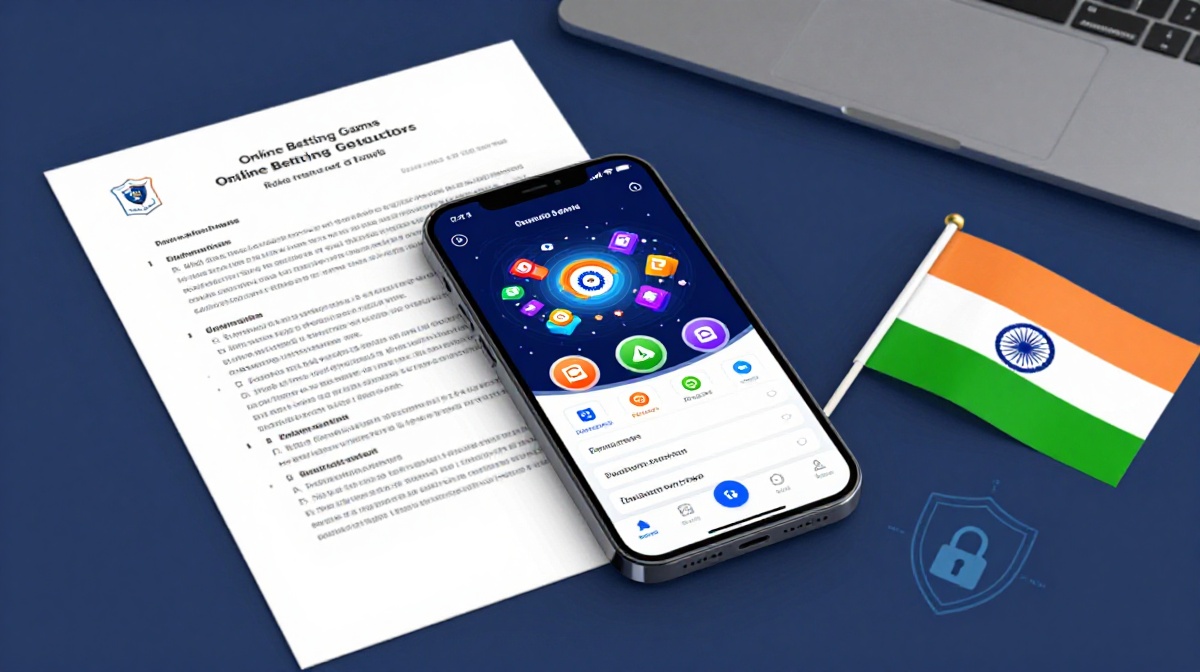
India now has a single, nationwide answer. The Promotion and Regulation of Online
Gaming Act, 2025, received Presidential assent on 22 August 2025. The Ministry of
Electronics and Information Technology MeitY then notified the Online Gaming
Rules, 2026, on 22 April 2026. Both came into full force on 1 May 2026.
The law leaves no grey area. All real-money online games are prohibited across India.
This covers sports betting, paid fantasy sports including platforms like Dream11
and MPL, online poker, rummy played for cash, and casino-style games on apps.
Crucially, the law does not separate skill-based games from chance-based ones.
If real money is staked and a prize is expected, it is banned.
A new central body, the Online Gaming Authority of India OGAI, now oversees
enforcement. Banks and payment platforms are barred from processing transactions
connected to prohibited online money games. By March 2026, the government had
already blocked 8,376 website URLs linked to betting and gambling, with the
crackdown expected to intensify further.
Why India Had to Act The Scale of Financial Harm
The numbers that pushed Parliament to act were hard to overlook. According to data
cited during the passage of the bill in August 2025, nearly 45 crore Indians had
been losing over ₹20,000 crore every year to online money games. That figure
exceeds the annual budget of several Indian state governments.
In Telangana, Chief Minister Revanth Reddy told the state Assembly that 51 people
died by suicide between 2023 and early 2025 because of losses and financial
distress from online gambling. Investigators also found that one single app,
Mahadev Online, reportedly generated around ₹43,000 crore over seven years,
according to prosecution documents filed by the Enforcement Directorate.
A 2025 report by CUTS International, a public-policy research organisation,
estimated that the 15 largest unauthorised betting platforms received more than
5.4 billion visits from India in the 2024-25 financial year. These platforms
operated with no age verification, no deposit limits, and no player protection
of any kind.
How Real-Money Betting Games Are Designed to Work Against You

Most platforms follow a familiar pattern. You create an account, deposit a small
amount usually ₹100 to ₹500 to start, pick a cricket match or a card game,
and place a bet. Win, and the app adds money to your wallet. Lose, and you are
prompted to try once more.
The low entry amount is not accidental. You do not feel ₹200 disappearing the
same way you would feel ₹20,000 leaving your savings. But the app is built
to keep you returning. Bonus credits, referral rewards, and time-limited
promotions hold your attention while the losses quietly add up.
The odds in almost every game are set in the platform’s favour. Over time, the
average player loses more than they win. This is not a flaw in the system.
It is how the system makes money.
The Financial Risks That Go Beyond the App
The first risk is losing the money you deposited. The deeper trap is the urge
to recover what you lost. Many players end up taking personal loans, borrowing
from relatives, or spending savings meant for medical expenses or education.
Police complaints from Delhi, Maharashtra, Uttar Pradesh, and Telangana
document exactly this cycle.
There is also a tax dimension from years when these platforms were active.
Under the rules in effect before the ban, winnings from online money games were
taxed at 30 percent with no deductions allowed. Losses could not be offset against
any income. A player who won one month and lost the next could still have owed
the Income Tax Department a significant amount.
The financial damage rarely stays inside the app. Families find out about
loans taken without their knowledge. Credit scores drop. In documented cases,
people have pledged household gold or taken loans against property to fund
continued betting.
Penalties and Legal Risk for Users
The Promotion and Regulation of Online Gaming Act, 2025 primarily targets
platform operators. But individual users carry real risk too.
You can face an FIR under your state’s own gambling legislation. Telangana and
Andhra Pradesh have especially strict state laws that treat online gambling as
a criminal offence for users as well. Your bank account can be flagged and
suspended if transactions are linked to prohibited platforms. Income-tax
authorities may also probe large or unexplained credits from betting wallets.
If you are unsure about a platform you have been using, speak with a qualified
lawyer before making any further transactions. Do not rely on the platform’s
own assurances about its legal status.
What Is Still Legal for Indian Players
The 2026 rules draw a clear line, and not everything is off the table.
E-sports competitions where no money is staked by participants, free-to-play
games with no cash prizes, and social gaming apps without real-money deposits
all remain legal under the new framework.
Land-based casinos continue to operate in Goa, Sikkim, and Daman under their
respective state licensing frameworks. Horse racing through licensed clubs
has long been treated as a regulated activity under the Supreme Court’s
interpretation of the Public Gambling Act, and this continues.
If You Have Already Lost Money to Online Betting
Stop all activity on the platform immediately. Make a note of the app name,
the amounts deposited, and all related transaction records from your bank
statement. These will matter if you file a complaint.
If the platform was operating illegally, file a complaint with the National
Cyber Crime Reporting Portal or call 1930, the
national cyber crime helpline. Your local police station can also register an
FIR with transaction records as evidence.
If a family member is struggling to stop betting, the Vandrevala Foundation
helpline at 1860-2662-345 offers free, confidential counselling around the
clock. Financial recovery takes time, but addressing outstanding loans early
cuts the interest burden significantly. A certified financial planner can
help you set up a realistic repayment plan.